
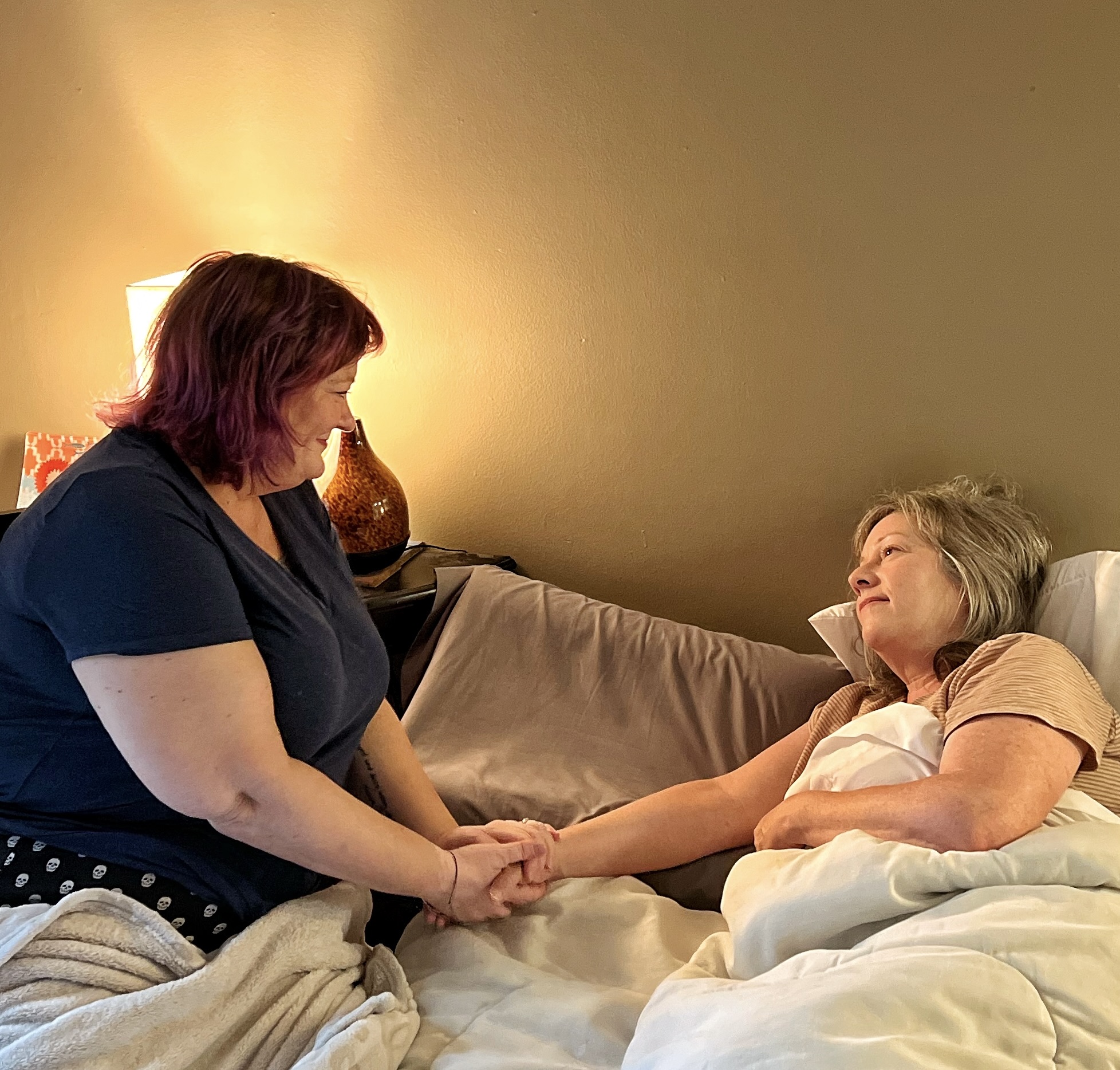

On Friday, our caregivers were celebrated for National Caregivers Day. I didn’t want to miss the opportunity to highlight the special challenges for the millions of us who are paid and unpaid caregivers, but did. not have time last week. (Because of caregiving.) Caregiving is hard, challenging, rewarding, and life-changing, and if you are a caregiver, you deserve to be celebrated every day of the year.
No one ceremoniously hands you the title of caregiver. There’s no graduation. No orientation.
It doesn’t even have a clear beginning. One day you are a daughter, a spouse, a friend, and then seemingly overnight, you are managing medications, deciphering medical language, coordinating appointments and trying to stay calm while your heart quietly breaks.
Caregiving often begins with love, and it continues, sometimes for years, with love. But it is sustained by something far more complex.
There are things I wish I had known before stepping into this role. Not because it would have made it easy, but because it would have helped me be gentler with myself.
I Wish I’d Known That Grief Starts Early
I used to think grief began when someone died, but in reality, grief begins the moment something changes.
The first diagnosis.
The first fall.
The first time they forget your name.
The first time you realize life will not go back to what it was.
Caregiving is layered with anticipatory grief — mourning someone who is still here. And that kind of grief can feel confusing and lonely. You question yourself. Why am I grieving when they’re still alive? Because something sacred, something that you once understood, and your entire concept of “normal life” has shifted. And that matters.
I Wish I’d Known How Lonely It Can Be
Even surrounded by doctors, siblings, helpers, and friends, caregiving is one of the most isolating human experiences. You are the one holding the information at the moment. You are the one noticing the subtle changes. You are the one awake at 2 a.m.
People will say, “Let me know if you need anything.” But what you often need is someone who understands what you can’t even express: the emotional labor, the vigilance, the constant low-grade fear.
Loneliness in caregiving isn’t about being alone. It’s about being the one who must carry the weight of the unknown through changes that are happening daily.

I Wish I’d Known That Guilt Would Be a Constant Companion
You’ll feel guilty for being tired. Guilty for wanting time away. Guilty for not doing more. Guilty for resenting your caregiving role many days. Guilty for even imagining a “simpler” life after this season ends. Caregivers experience guilt because we care.
But here is what I’ve learned: guilt is a side-effect of your deep care, not because of your failure. You can love someone fiercely and still feel overwhelmed and guilty. Both can be true at the same time.
I Wish I’d Known That Small Victories Are Everything
Caregiving recalibrates what “success” looks like.
A good day becomes:
- A calm appointment.
- A shared laugh.
- A meal they actually eat.
- A story remembered.
- A peaceful night’s sleep.
Tiny moments begin to feel enormous. You learn to celebrate the ordinary. You learn that presence is sometimes the greatest accomplishment and real blessing.
I Wish I’d Known How Important It Is to Prepare
In the midst of crisis, decision-making is exhausting. I wish I had fully understood how much easier it is when papers are in place. When wishes are documented. When conversations have already been had.
Advance directives are not morbid. They are merciful. Planning does not invite death in or jinx us. Having detailed plans invites clarity and peace, and greatly lessens chaos when emotions will be fraught and stress will be high.
Caregiving taught me that preparation is an act of profound love.

I Wish I’d Known That This Season Would Change Me
Caregiving reshapes you.
It reveals your tenderness and your limits.
It exposes old family dynamics.
It teaches patience and sometimes highlights all the times and areas where you don’t have it.
It can harden you, and it can be harmful to your health if you’re not careful. (Caregiver syndrome is a real and common phenomenon.) But it can also be a profound season of growth. I have seen people become more compassionate, more intentional, more aware of what truly matters. Caregiving strips life down to its essentials. And in that stripping away, something new and beautiful can emerge.
If you’re a caregiver right now, if you are in the thick of it all, the appointments — the paperwork, the emotional ups and downs — I want you to know this: You are not failing.
If you are tired, that makes sense. You are human and not a failure.
If you are grieving, that is okay, too. You are human and not a failure
If you are frustrated, guilty, and devoted all at the same time, that is perfectly reasonable. Your are human, not a failure.
Caregiving is not meant to be done alone. It requires community. Support. Conversation. Planning. Rest. And sometimes, it requires someone to sit with you and say, “This is hard. And you’re doing it.”
If caregiving has shown me anything, it is this: Life is fragile. Time is precious. And the conversations we avoid are often the ones that bring the most peace later.
If you’re ready to talk about preparing, about grief, about the weight you’re carrying, I am here. Because caregiving changes us. But it doesn’t have to break us.